 Analysis by Gamescozy
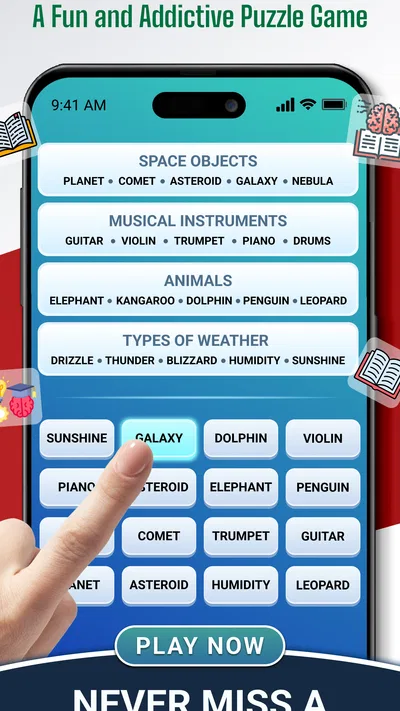
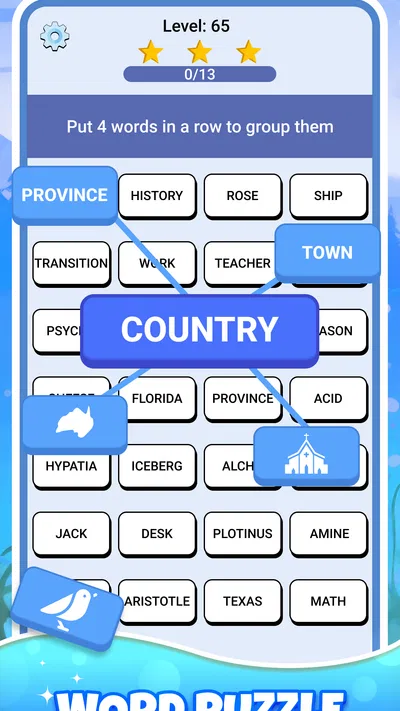
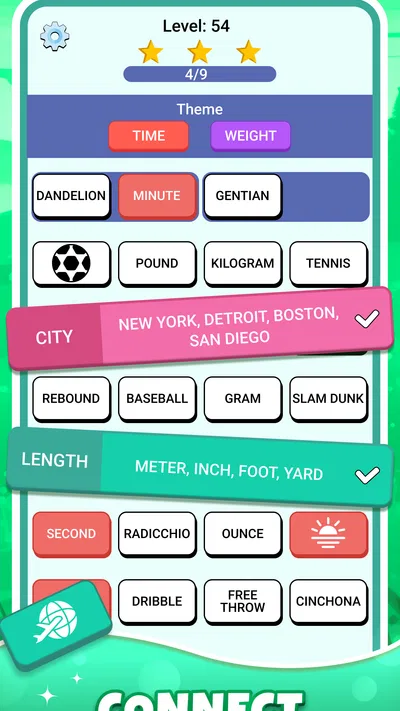
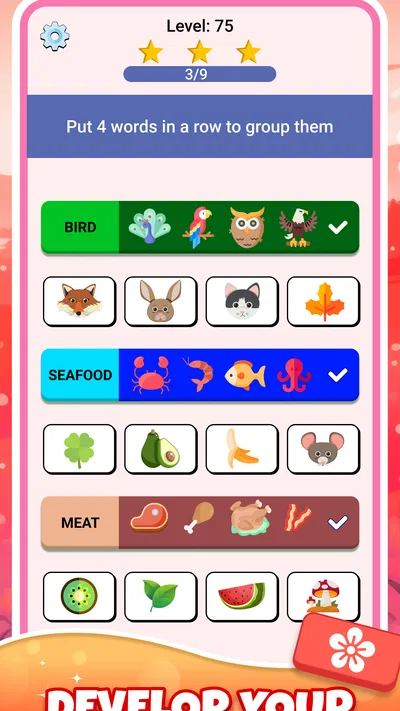
I approached Word Connect Association as a small, quiet word game for the spare moments that tend to get filled by scrolling. Its appeal is easy to understand: you look for relationships between words, make connections, and keep your attention on a compact puzzle rather than a sprawling game world. That makes it a good fit when I want a little mental activity without needing to plan a long session or learn a complicated system.
It is a word game from PlaySimple Games, and the current release is version 1.70.0. The game is free to start, with optional in-app purchases, and its Everyone age rating makes it suitable for a broad audience. I would think of it as a casual brain teaser first and a vocabulary workout second: the pleasure comes from spotting links and testing an idea, not from studying definitions or racing a clock.
How the association puzzles feel in everyday play
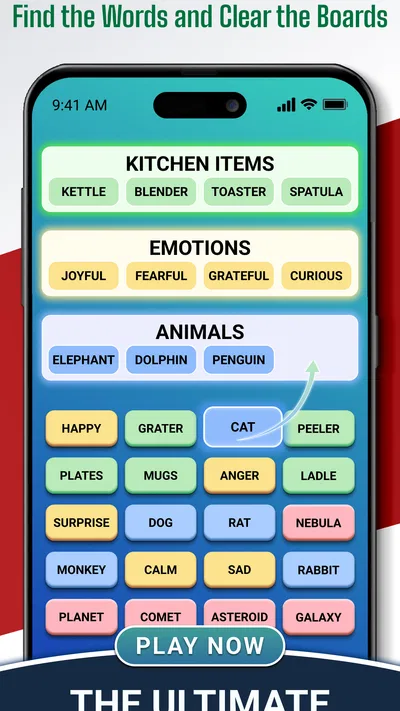
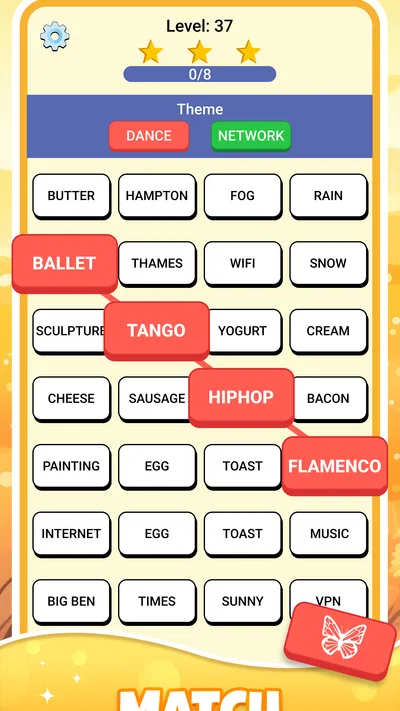
The central challenge is to notice why words belong together. That sounds simple, but association puzzles can make you reconsider an obvious connection when another word seems to fit better. I like that this kind of task rewards flexible thinking: a word may bring to mind a familiar topic, a shared meaning, or a less immediate relationship, and the useful move is often to pause and look at the whole set rather than lock onto the first plausible answer.
That makes the game especially comfortable in short bursts. I can imagine opening it while waiting for a friend, taking a few minutes during a break, or settling into a calm evening routine. It does not ask for the commitment of a long strategy session, and its premise is easy to return to after putting the phone down. For someone who enjoys word puzzles but does not want every session to feel like a test, that lighter pace is a real strength.
The store description presents it as a relaxing way to exercise the brain, and that is the right expectation to bring. “Train your brain” should not be taken as a promise of measurable learning or a formal vocabulary course. The more realistic benefit is that you practise looking for patterns, weighing alternatives, and changing your mind when a connection does not hold up. I find that modest goal more convincing than treating a casual game as a substitute for focused study.
A practical way to play is to scan every word once before making a choice. Then identify the strongest two or three possible themes and check whether each one accounts for the entire set, not just a convenient pair. This small habit helps avoid the classic association-puzzle trap: choosing a connection that is true in isolation but leaves the remaining words awkwardly unexplained. It also turns a quick guess into a more satisfying reasoning exercise.
Where it fits among word games
Compared with a crossword, this game puts less emphasis on recalling exact answers from clues. Compared with a word-search puzzle, it is less about visually tracing letter sequences. Its distinctive appeal is semantic: you are working with what words suggest and how their meanings overlap. That can feel more conversational and intuitive, though it may also be more subjective than a puzzle with a clearly defined clue and answer.
If you enjoy anagrams, the contrast is useful. An anagram game asks you to rearrange letters and spot possible words; association play asks you to consider meaning and context. Players who love manipulating letter tiles may prefer an anagram-focused alternative, while people who like sorting ideas into themes are more likely to settle into this one. Neither approach is inherently harder; they exercise different habits of attention.
The game has a 4.8 average from around 43,000 ratings, with roughly 2,200 written reviews and over a million installs. Those figures suggest that it has found an audience among casual word-game players, but they cannot tell me whether its particular puzzle style will suit you. I would use them as a sign of broad interest, then decide based on whether you enjoy making meaning-based connections rather than chasing scores or competing against other players.
What the release information tells existing players
The game was released on July 7, 2025, and version 1.70.0 is its current version. That gives a clear snapshot of the product’s present state, but it is not enough to establish what changed between releases. I would not infer new puzzle types, interface improvements, or balance adjustments from a version number alone. For someone already playing, the practical takeaway is simply to check the app store for the current build and judge the game by what is actually available on their device.
That distinction matters because players often want to know whether an update will change their routine or preserve their progress. A release number by itself cannot answer either question. If you are midway through a session or rely on saved progress, I would check the update notes and the app’s own prompts before making assumptions. That is a sensible precaution for any mobile game, especially when the precise effect of a particular update is not established here.
For a new player, the current version is the most relevant starting point: it is the edition they can install now, rather than an older build they might see mentioned elsewhere. The minimum operating-system requirement is version 8.0, so it is worth checking your device’s software before downloading. The game is free to install, but optional purchases range from $0.99 to $199.99 per item. That wide span is a reason to review purchase prompts carefully, particularly if a child will be using the device.
In practical terms, I would treat the free entry point as a chance to find out whether the puzzle style works for you before spending anything. If a purchase is offered, pause and consider whether it solves a problem you actually have or merely makes a moment of frustration disappear. For a game built around calm, low-pressure thinking, paying to rush past the thinking would defeat much of the point for me.
Strengths, friction, and who should skip it
The strongest reason to try it is the low barrier to entry. You do not need to know a fictional world, remember a storyline, or build a complicated strategy. You can focus on the words in front of you. That simplicity also makes it easy to share the idea with a family member or friend: each person can suggest a connection, explain their reasoning, and compare interpretations without needing a tutorial in genre conventions.
There is a trade-off, though. Association puzzles can feel less satisfying when you want a single, rigidly objective answer. If two relationships seem plausible, a player may feel that the challenge depends on interpreting the intended grouping rather than solving a purely mechanical problem. I would be more cautious recommending it to someone who gets annoyed by ambiguity or prefers puzzles where every clue has one unmistakable solution.
It may also be the wrong choice if you want a deep, long-term progression system, a competitive match, or a game that demands quick reactions. Nothing about its core premise suggests that speed or elaborate planning is the main attraction. Players who want a daily head-to-head challenge or a substantial campaign may be happier with a different kind of word game. Here, the likely pleasure is the small moment of recognition when several words suddenly make sense together.
One useful way to avoid frustration is to treat a stuck puzzle as a prompt to change perspective, not as proof that you lack vocabulary. Try grouping by a broad topic, then test a more specific connection; consider whether a word has a second meaning; and temporarily set aside the most obvious pair to see what the remaining words suggest. These are practical reasoning tactics rather than guaranteed shortcuts, and they preserve the satisfying part of the puzzle: arriving at a connection through your own thinking.
Who will get the most from it
I would recommend it to someone who likes compact word challenges, enjoys talking through why words belong together, and wants a relaxed activity that can fit between other tasks. It could also work well for a parent and child to solve side by side, as long as an adult manages any purchase decisions. Its Everyone rating supports that broad audience, but a rating does not mean every child will find the puzzles easy or every adult will enjoy the style.
For a realistic everyday use, picture a short wait at a café. Instead of opening a game that needs a long uninterrupted run, you can focus on one set of words, consider a few possible themes, and stop when the moment is over. The same approach works during a commute when you are safely seated and not responsible for navigation, or as a brief wind-down activity at home. I would avoid expecting it to hold attention for an entire evening unless you already know that association puzzles are your kind of pastime.
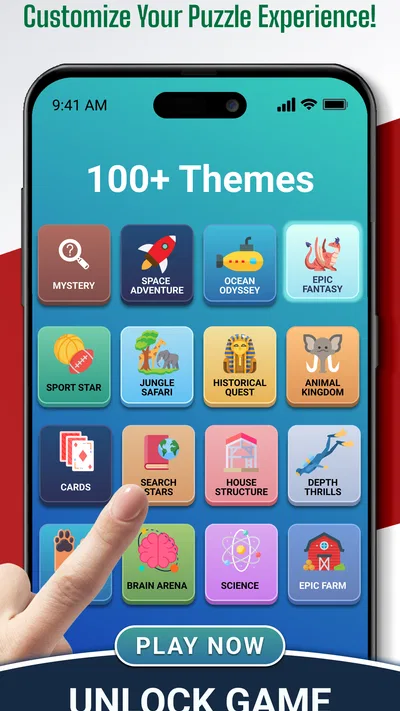
It is less suited to players who want a structured lesson in language, a dictionary-led experience, or a guarantee that every puzzle will have an answer that feels obvious in hindsight. It is also not my first choice for someone who wants extensive customization or a strongly social competition. Those are reasonable preferences, but they point toward other subgenres rather than a flaw that can be fixed by approaching this game differently.
What I would keep an eye on
When deciding whether to keep playing, I would pay attention to whether the puzzles feel pleasantly challenging or simply unclear. A good association puzzle should make me reconsider my assumptions while still allowing me to understand the intended link once I see it. If I repeatedly feel that a connection is arbitrary, the format may not match my taste, even if I generally enjoy word games. That is a more useful test than judging the experience by a single easy or difficult round.
I would also watch how optional purchases affect your own experience. Since the game is free to start and offers paid items, a player who prefers an entirely purchase-free routine should take note of any prompts and decide in advance whether they are comfortable ignoring them. The stated item range runs from $0.99 to $199.99, so it is particularly sensible to use device-level purchase protections for younger players and to check the final amount before confirming anything.
As the game continues to evolve, release notes are the best place to look for confirmed changes rather than guessing from a higher version number. I would be interested in any clearly documented adjustments to the puzzle experience, but those are expectations, not claims about what this edition contains. For current users, that approach keeps decisions grounded: update when the app store presents a version you want, and rely on visible notes rather than assuming an update will add a feature you have been waiting for.
My overall view is that Word Connect Association is worth trying if you want a gentle, meaning-focused alternative to crosswords, word searches, and anagrams. I like its simple premise and its suitability for short breaks, while recognizing that the ambiguity of word relationships will not appeal to everyone. It is free to begin, available for devices running version 8.0 or later, and currently sits at version 1.70.0; the best reason to keep it installed is not a promise of endless novelty, but whether those small acts of connection leave you refreshed rather than frustrated.